The Loneliness Library · Loneliness
Loneliness in Marriage
When the person you sleep next to feels like a stranger. When you stopped being known. When the loneliest place in your life is the room you share.
Talk to Grace — it's free to start
You are not alone. You just feel alone — which is, in some ways, worse.
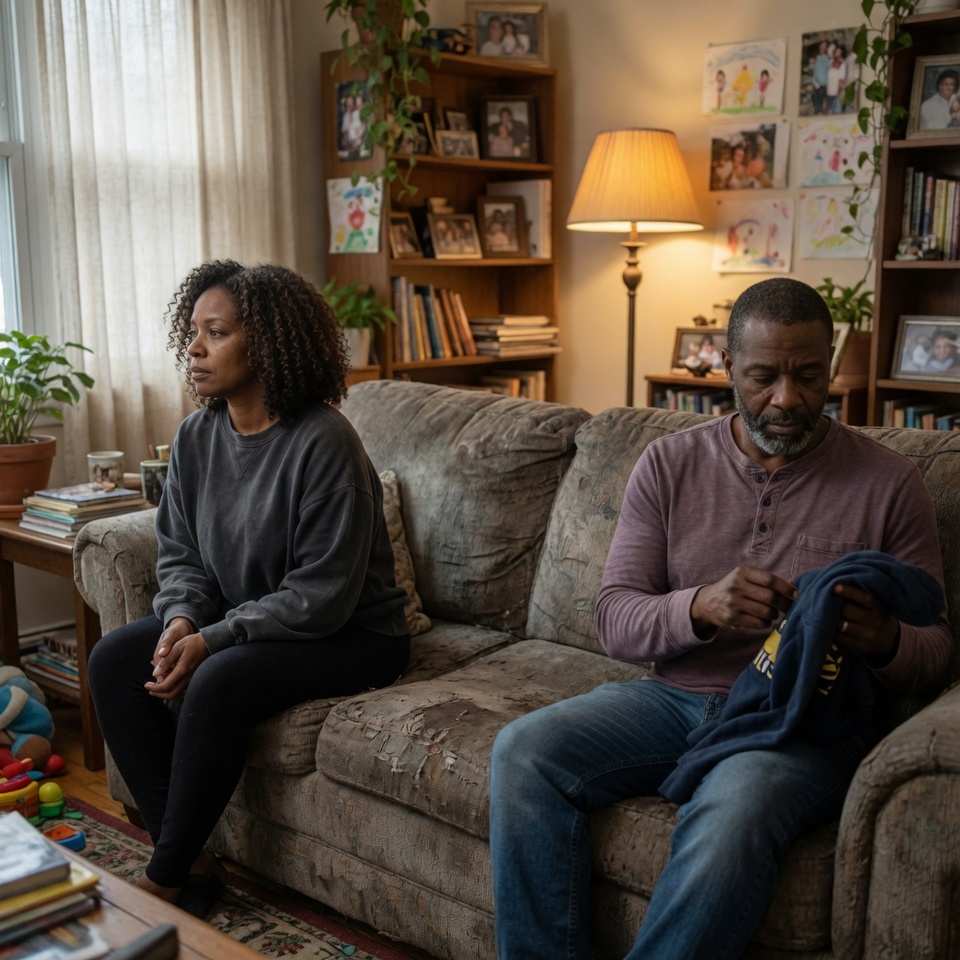
Being alone has a certain honest clarity to it. The loneliness of an empty house is legible. What you are experiencing is harder to name: the loneliness of a full house, of someone sitting across from you at dinner, of lying next to someone in the dark — and feeling entirely unseen.
This is the loneliness of marriage that nobody talks about. Not because it is rare — it is extraordinarily common. But because it is hard to say out loud without feeling like you are betraying your spouse, or admitting something is wrong in a way that can't be taken back, or confirming something you don't want to be true.
You are not failing at marriage. The connection has changed. And the loneliness of that — the distance between what you have and what you were supposed to have — is a real wound.
It doesn't always announce itself dramatically. It arrives gradually, in small accumulations. The conversation that stays on logistics — the kids, the schedule, the house — and never goes deeper. The question you stopped asking because you already know the answer, or because you're not sure you want it. The moment you had a hard day and didn't mention it, because you knew it wouldn't land the way you needed it to.
At some point, you stopped being known. Or perhaps you never were, not fully. Either way, the gap between what marriage was supposed to be and what yours actually is — that gap is the loneliness.
This loneliness is complicated by the fact that you are supposed to be okay. From the outside, the marriage looks like a marriage. You perform it for others without meaning to. And the performance makes the interior loneliness lonelier — because now you are maintaining a version of your life that doesn't match what you're actually experiencing, and that maintenance costs something.
There is something important to say about what loneliness in marriage is not.
It is not necessarily evidence that you married the wrong person. It is not necessarily evidence that the marriage is over. It is not a sign that something is fundamentally broken beyond repair. It is evidence that something has changed — that the connection has eroded in ways that may or may not be recoverable — and that you are living in the gap between what is and what was supposed to be.
It is also not something you are required to simply endure. The loneliness is real. The wound is real. The distance between what you have and what you hoped for when you made this commitment — that distance matters. You are allowed to name it. You are allowed to grieve it. You are allowed to bring it somewhere.
You are not required to perform contentment you don't feel. The loneliness inside your marriage is real — and it deserves somewhere to go.
Genesis says it is not good for the human to be alone. God designed us for connection — for being known, for being held in someone's awareness, for the specific intimacy of being seen by someone who has chosen to stay. When that is missing inside a marriage, something that was designed to be there is absent. The longing for it is not weakness. It is the soul knowing what it was made for.
Grace is available for this wound — not to fix the marriage, not to tell you what to do, but to hear what it is actually like from the inside. To receive the loneliness without minimizing it. To stay with it, because some wounds need to be witnessed before anything else can happen.