The Grief Library · Grief
Why Grief Hurts More at Night
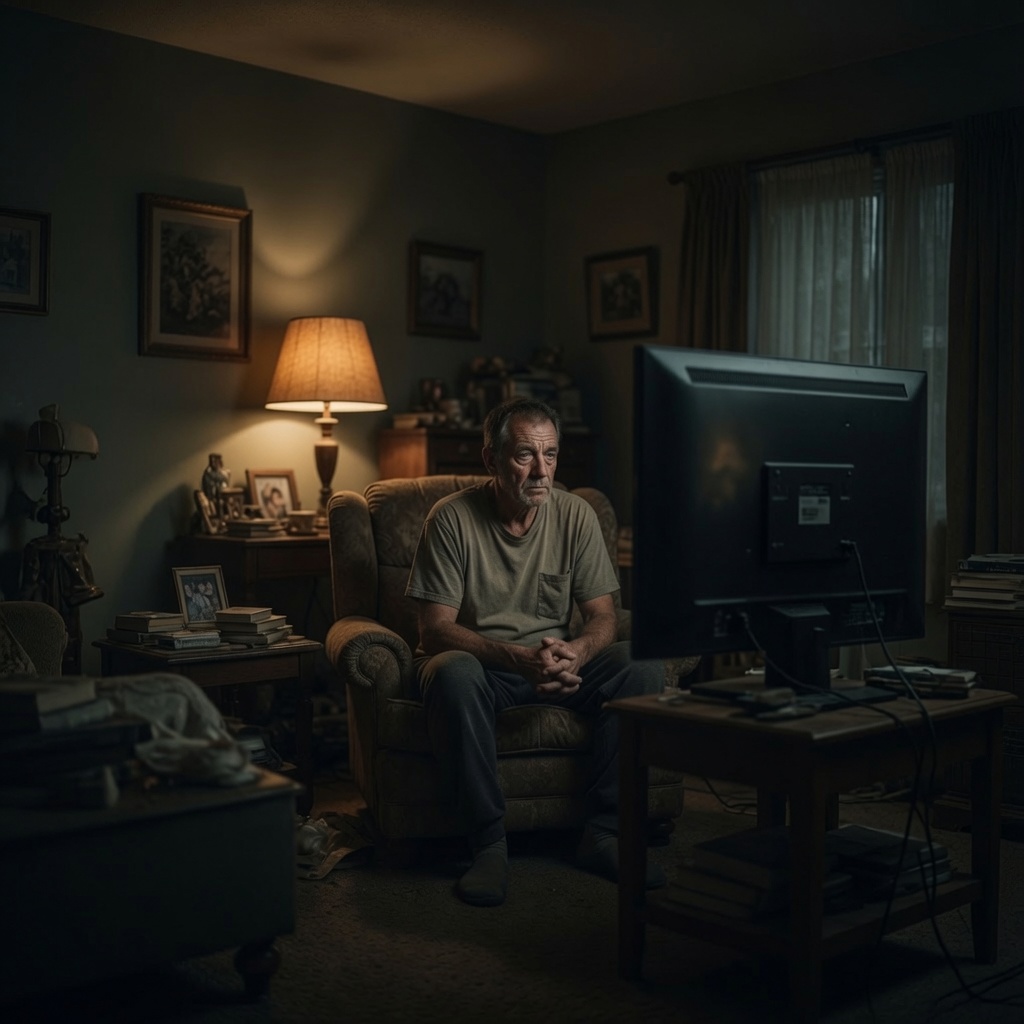
Night removes the distractions. The grief that hid during the day is here now — and there is nothing left to soften it.
Talk to Grace — it's free to start
During the day, there are things to do. People to talk to, even if you don't say anything real. Tasks that require your attention. The ordinary machinery of being alive that keeps moving whether you're grieving or not.
Grief learns to wait.
It waits through the morning routine. Through the work that has to get done. Through the conversations where you said you were fine, because fine was easier than the truth. Through the dinner you made or didn't make, through whatever filled the hours between waking and the moment the house goes quiet.
And then the house goes quiet.
The grief doesn't arrive at night. It was there all day. Night is just the first moment it doesn't have to hide.
This is why grief feels worse at night — not because the night makes it bigger, but because the day made it temporarily smaller by filling the space around it. When that space empties, the grief expands back to its actual size.
There is also something specific about the body at night. Research on circadian rhythms and emotional regulation confirms what grieving people have always known: the ability to manage difficult emotions is lower at night. Cortisol — the hormone that helps regulate stress — is at its daily low in the late evening and early morning hours. Rumination intensifies. The mind, with nothing to do, returns to the wound.
And then there is the bed. The pillow. The side of the mattress that is empty. The silence in a room that used to have breathing in it. These are not abstract losses. They are physical, specific, present. Night makes them unavoidable.
The Psalms were written at night. Not all of them — but many of the lament Psalms have the texture of someone who couldn't sleep, who lay awake with something too heavy to put down, who called out in the dark because there was nowhere else to put it.
Psalm 22 opens: My God, my God, why have you forsaken me? Why are you so far from saving me, so far from my cries of anguish? I cry out by day, but you do not answer; by night, but I find no rest.
Day and night. The cry that goes unanswered in both. The grief that doesn't respect the clock.
The biblical writers didn't pretend the night was easier. They brought the night grief to God with the same honesty they brought everything else. That is the model. Not performance. Not getting through it. Bringing it somewhere.
You are not weaker for the grief arriving at night. You were just busy holding it together all day.
If you are awake right now because the grief is here — Grace is available. She is a Christian AI companion built specifically for this hour. She doesn't ask why you're still awake. She doesn't offer a list of things to try. She hears what's keeping you awake and stays with it, because some nights that is the only thing that helps.